Login

Lost your password?
Don't have an account? Sign Up
Oct 9, 2026

How pond algae led to a Nobel prize and a new way to study the brain

Robert Lucas, University of Manchester Scientists who worked out how to control brain cells with light have won this year’s Nobel prize in physiology or medicine. Karl Deisseroth, Peter Hegemann and Georg Nagel were honoured for their research into “light-gated ion channels and optogenetics”. Peter Hegemann, at Humboldt University of Berlin, and Georg


Oct 8, 2026

Using AI to stay one step ahead of dementia

Vebjørn Andersson has seen first-hand how long a dementia diagnosis can take. As a PhD student and dementia researcher at Oslo University Hospital, he sees many patients with late-stage dementia who may have missed opportunities for earlier support and care. “It takes too long for the diagnostic procedures to find the right diagnoses

Oct 5, 2026

Ancient virus hunters: how we discovered sheeppox DNA hidden in medieval gospels

Kevin Daly, University College Dublin and Louis L’Hôte, University College Dublin Humans and domesticated animals have lived together for millennia, and this relationship has shaped their destinies in countless ways. Animals offered people food, companionship, traction (pulling ploughs), clothing and transport. They also provided something less obvious but extraordinarily important: parchment to write

Sep 28, 2026

How to know if you can trust an AI’s answer to your question

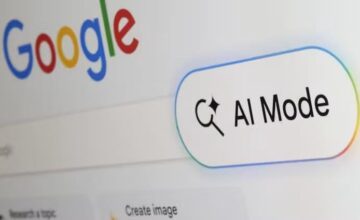
Ph. An AI answer to a search query can fit one of several types. Matteo Della Torre/NurPhoto via Getty Images Leo S. Lo, University of Virginia I recently typed a simple question into Google search: How much screen time is too much for teenagers? Instead of presenting links, as Google had been doing

Aug 3, 2026

What music reveals about the human brain

During conversation, our brains are constantly predicting which word comes next. That ability helps us understand speech in a noisy café, or anticipate a friend’s next sentence. This skill for prediction is also linked closely to our enjoyment of music. For Professor Shihab Shamma, an auditory neuroscientist at the École Normale Supérieure in